
The Pleiades: Exploring the Fascinating Myths Behind the Seven Sisters Star Cluster
More...
High above us in the night sky lies a small, shimmering cluster of stars that has captivated humanity for tens of thousands of years. Known as the Pleiades, or the Seven Sisters, this celestial grouping has inspired myths, legends, calendars, and spiritual beliefs across nearly every ancient civilization. From Greek goddesses to Indigenous sky stories, the Pleiades are far more than just a collection of stars—they are a universal symbol of mystery, destiny, and cosmic connection.
What Are the Pleiades?
The Pleiades are an open star cluster located in the constellation Taurus, approximately 444 light-years from Earth. To the naked eye, most people can see six or seven stars, though there are actually over a thousand stars in the cluster.
Astronomically, the Pleiades are relatively young—about 100 million years old—and they glow with a striking blue hue. Their brightness and tight grouping made them easy for ancient peoples to identify, long before telescopes existed.
But what truly makes the Pleiades special isn’t just their beauty—it’s the way nearly every culture on Earth has woven stories around them.
The Greek Myth: The Seven Sisters
The most famous story comes from Greek mythology. According to legend, the Pleiades were seven daughters of the Titan Atlas and the sea nymph Pleione. Their names were:
-
Maia
-
Electra
-
Taygeta
-
Alcyone
-
Celaeno
-
Sterope
-
Merope
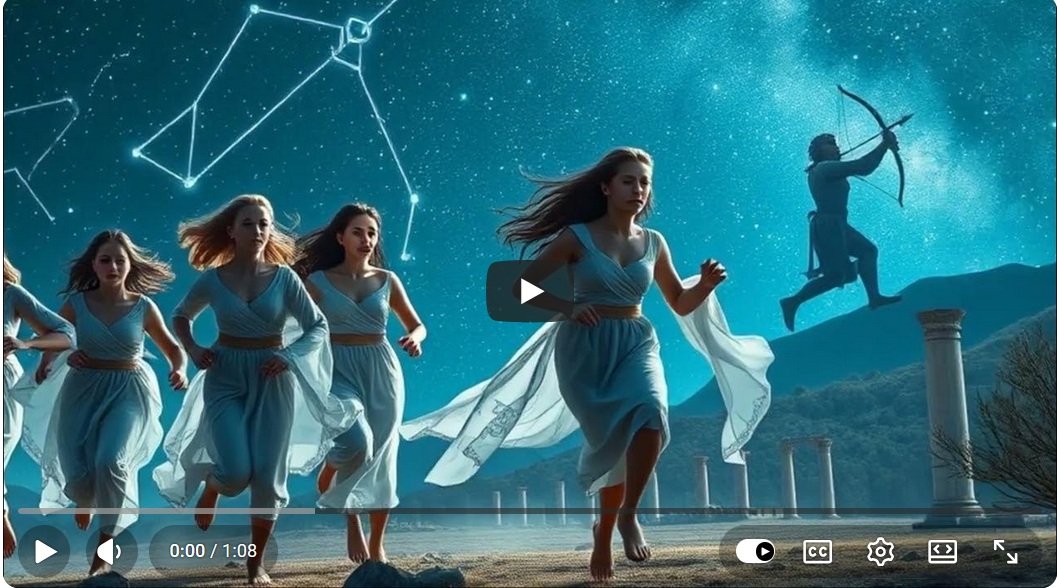
These sisters were said to be companions of Artemis, the goddess of the hunt. When the hunter Orion began pursuing them relentlessly, Zeus took pity on the sisters and transformed them into stars so they could escape him.
Even today, Orion appears in the sky as if he is eternally chasing them.
Why Is One Sister Missing?
Many people can only see six stars with the naked eye, even though the myth speaks of seven. In Greek lore, this is explained by Merope, who supposedly dimmed her light out of shame because she fell in love with a mortal. This “lost” or faint sister appears in many cultures, adding to the mystery of the cluster.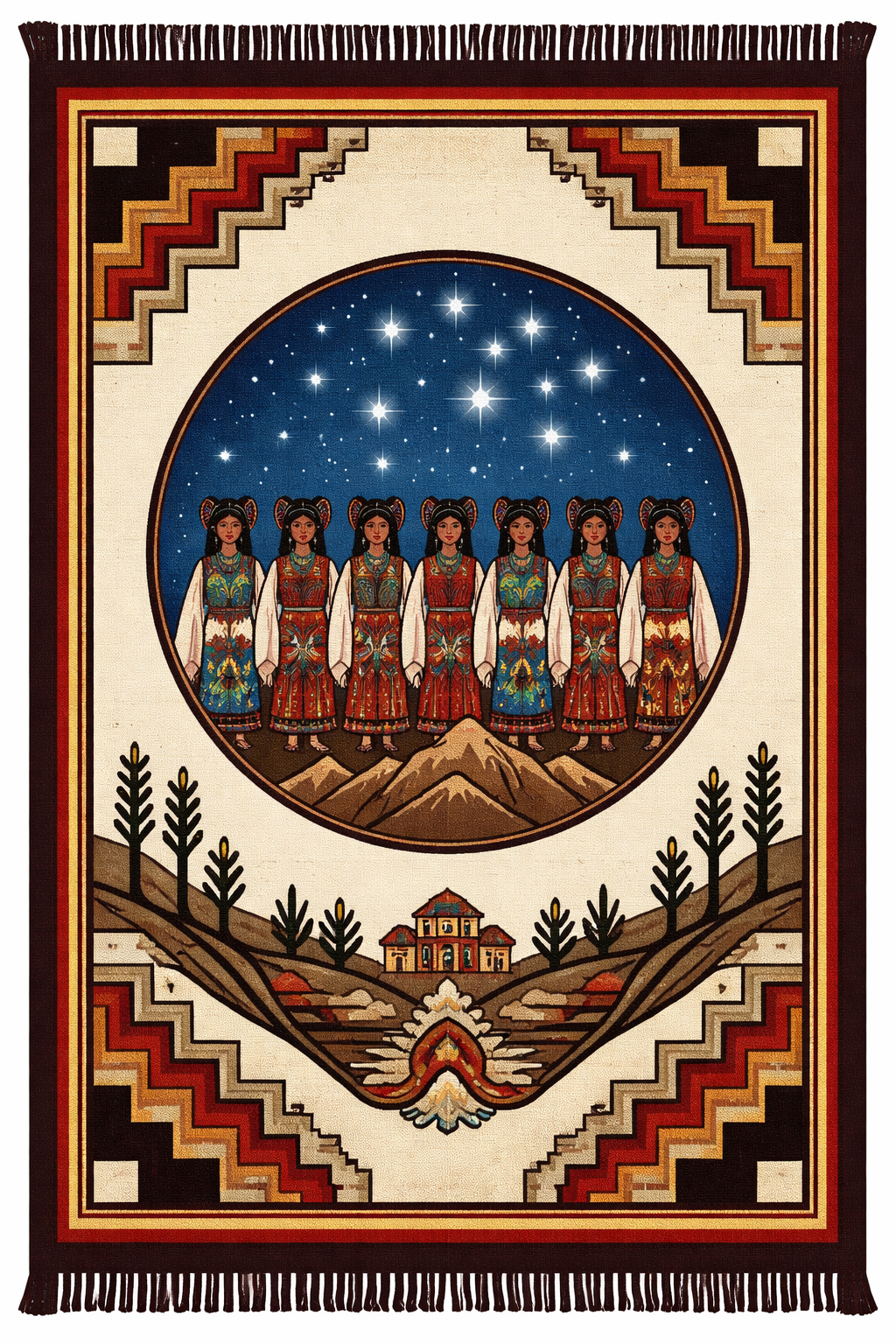
Indigenous Australian Dreamtime Stories
Aboriginal Australian cultures have told stories of the Pleiades for over 60,000 years. Many Dreamtime legends describe the cluster as a group of young girls or sisters being chased by a male figure, often represented by the constellation Orion.
In some versions, the sisters flee across the sky to escape unwanted attention, echoing the Greek myth—despite having no historical contact between the cultures. This striking similarity suggests something deeply human about how we interpret the stars.
Native American Legends
Among many Native American tribes, the Pleiades were seen as sacred.
-
The Kiowa told of seven sisters who escaped from bears by climbing onto a rock that rose into the sky, forming what we now know as Devils Tower. They became stars to stay safe.
-
The Cherokee believed the Pleiades were young boys who were so focused on dancing and playing that they forgot to eat. They eventually floated into the sky.
These stories often reflect themes of transformation, survival, and the crossing between worlds.
The Pleiades in Japanese and Asian Cultures
In Japan, the Pleiades are known as Subaru, meaning “to unite” or “to come together.” This symbolism was so powerful that it became the name and logo of the Subaru car brand—six stars representing six companies joining as one.
In Chinese astronomy, the cluster was part of the White Tiger of the West and associated with seasonal change, harvest cycles, and cosmic order.
The Maya and Mesoamerican Beliefs
For the Maya and Aztecs, the Pleiades were deeply tied to timekeeping and prophecy.
The Aztecs believed that the universe would end if the Pleiades failed to cross the sky at a specific time. Every 52 years, they performed the New Fire Ceremony, extinguishing all flames and waiting anxiously for the stars to appear—signaling that the world would continue.
This ritual shows how closely humanity once linked survival itself to the movement of the stars.
Why Do So Many Cultures See “Seven”?
One of the most fascinating aspects of the Pleiades myths is how many cultures refer to them as seven sisters, seven maidens, or seven beings—even though many people can only see six stars.
Scientists suggest that in ancient times, one of the stars may have been brighter, making seven visible to the naked eye. Others believe the number seven held deep spiritual significance long before organized religion.
Seven appears again and again: seven days, seven heavens, seven wonders, seven chakras. The Pleiades may have reinforced humanity’s mystical attachment to this number.
Spiritual and Modern Interpretations
Today, the Pleiades are often associated with:
-
Higher consciousness
-
Star origins and cosmic ancestry
-
Ascension and spiritual awakening
-
Galactic families or star beings
In New Age and metaphysical circles, some believe the Pleiades are home to benevolent extraterrestrial civilizations that guide humanity’s spiritual evolution.
While these ideas fall outside of scientific proof, they show that the Pleiades still inspire wonder, imagination, and a sense of something greater than ourselves.
Why the Pleiades Still Matter
The Seven Sisters remind us that long before modern science, humans looked up and found meaning in the stars. They used them to tell stories, track seasons, teach values, and explain the unknown.
Across continents and centuries, people told remarkably similar stories—of sisters, of pursuit, of escape, of transformation. This shared mythology reveals something powerful: even when separated by oceans and time, humanity has always searched the sky for connection.
The Pleiades are not just stars.
They are memory.
They are myth.
They are humanity’s reflection in the heavens.
Hopi Rug Related Articles
- How to Create a Traditional Hopi Loom for Weaving
- The Journey of the Star People: From the Three Caves to the Fourth World
- The Pleiades: Exploring the Fascinating Myths Behind the Seven Sisters Star Cluster
- The Story of the Kachinas and the Twelve Villages of the Three Mesas
- The Story of the Snake-Antelope Ceremony: A Hopi Legend
How to Create a Traditional Hopi Loom for Weaving
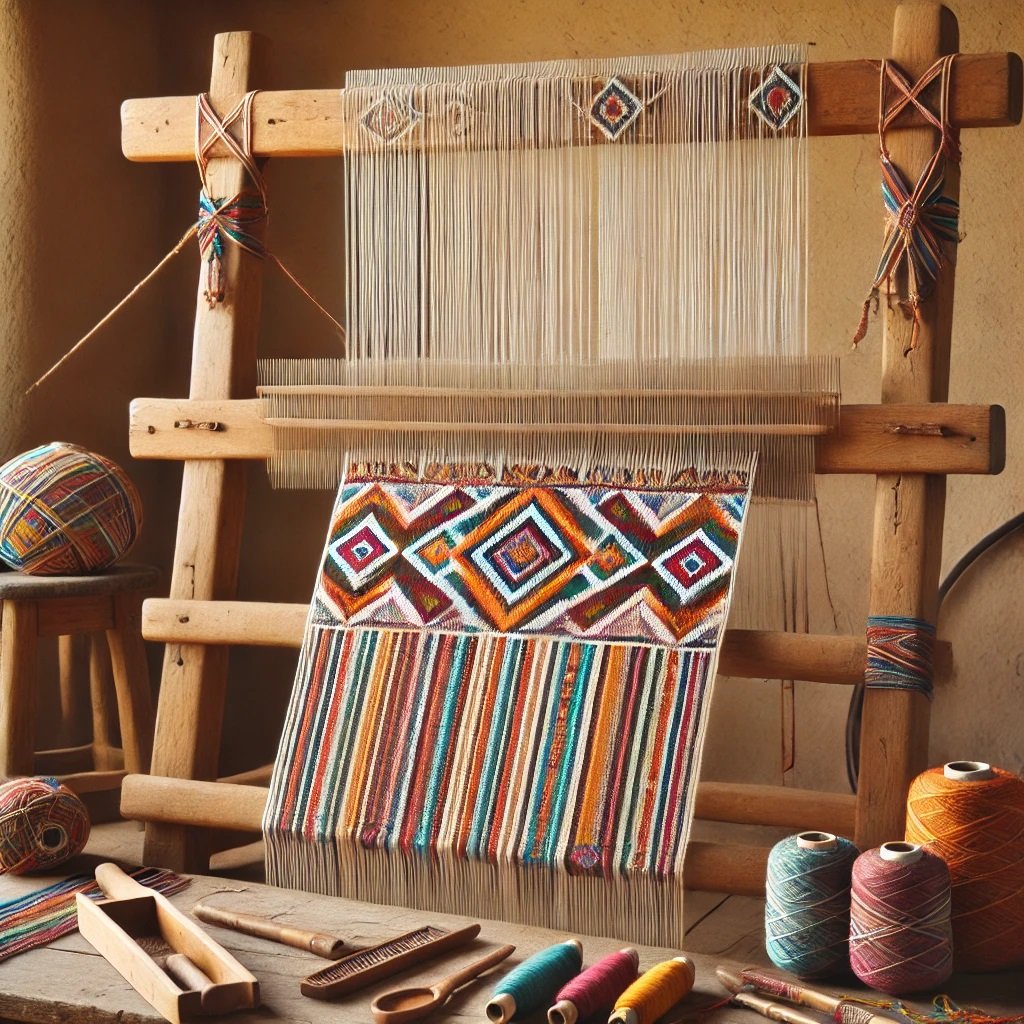 Creating a traditional Hopi loom involves crafting a simple yet effective structure that has been used for generations. Here are the detailed steps and specifications for building your own Hopi loom.
Hopi Rug Related Articles
- How to Create a Traditional Hopi Loom for Weaving
- The Journey of the Star People: From the Three Caves to the Fourth World
- The Pleiades: Exploring the Fascinating Myths Behind the Seven Sisters Star Cluster
- The Story of the Kachinas and the Twelve Villages of the Three Mesas
- The Story of the Snake-Antelope Ceremony: A Hopi Legend